

By Festus Damilare Ukolo | Fact Frontier.
Click here to read more about the reporter.
In a dramatic escalation of the political crisis gripping Rivers State, Federal Capital Territory (FCT) Minister Nyesom Wike publicly mocked Governor Siminalayi Fubara, dismissing the governor's new political allies as electorally inconsequential. The clash, which unfolded over the New Year, has exposed the deepening rift between the former allies and intensified the struggle for control of Nigeria's oil-rich state.
A New Year's Declaration Ignites Feud
The conflict erupted on the evening of January 2, 2026, during a New Year Banquet hosted by Governor Fubara at Government House in Port Harcourt. In a significant political pronouncement, Fubara declared that several high-profile former loyalists of the Peoples Democratic Party (PDP) presidential candidate Atiku Abubakar had now shifted their allegiance to his administration and to President Bola Tinubu's government.
The individuals named were political heavyweights in the state: former PDP National Chairman Uche Secondus, former Deputy Speaker of the House of Representatives Austin Opara, former Governor Celestine Omehia, and former Minister of Transportation Abiye Sekibo. Governor Fubara framed this development as a unifying consolidation of support, suggesting it strengthened his political standing and the prospects for peace in the state.

Wike's Scathing Retort
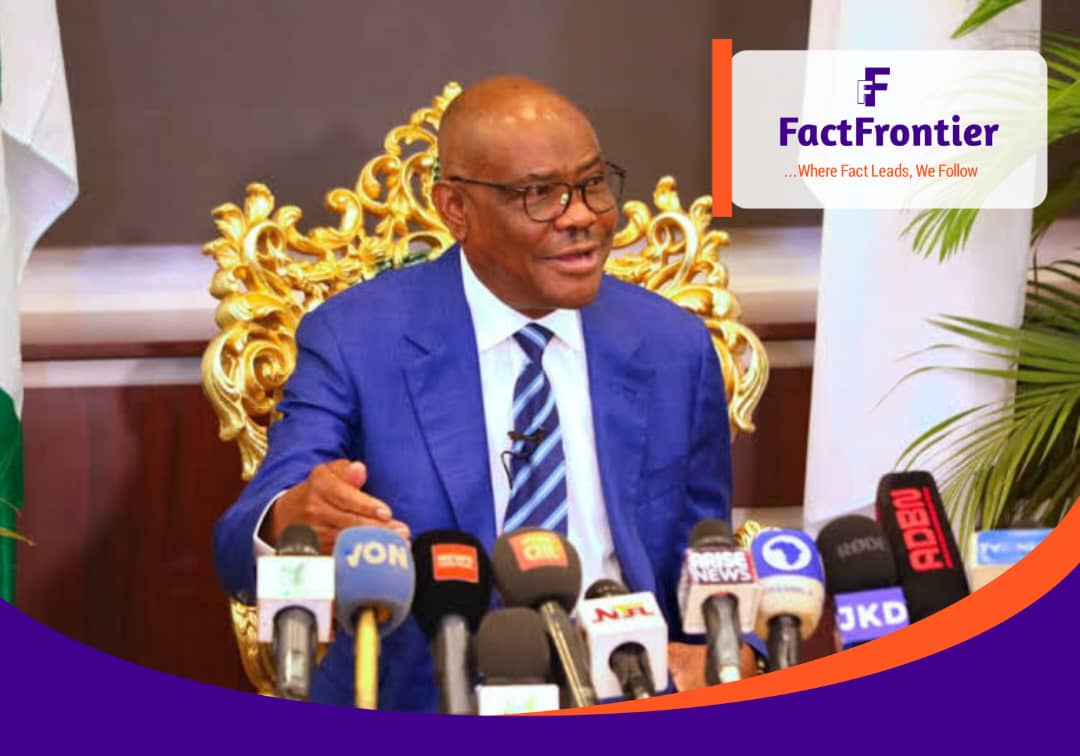
The response from FCT Minister Nyesom Wike, Fubara's predecessor and the man widely seen as his political godfather, was swift and scornful. The following day, January 3, Wike addressed supporters and media, launching a biting critique aimed squarely at the governor's new alliance.
In remarks widely circulated by Nigerian news platforms, Wike derided the named politicians, questioning their political value.
They are political paperweights,he was quoted as saying,
They couldn't give Atiku 10% votes in Rivers State in the 2023 elections. So, what is their political relevance now?This rhetorical jab was designed to minimize Fubara's achievement, suggesting that aligning with figures who failed to deliver their region for their former presidential candidate was a sign of weakness, not strength.
Wike further used the occasion to reaffirm his own unwavering support for President Bola Tinubu, positioning himself as the true and effective bridge between Rivers State and the presidency in Abuja.
The Poisoned Well of a Broken Alliance
To understand the venom in this exchange, one must look to the bitter feud that has defined Rivers politics since late 2023. What began as a succession has deteriorated into one of Nigeria's most destructive political battles.
People also read:
• Is Nigeria becoming one-party State – Chris Adighije
• Borno PDP calls for unity between Nyesom Wike and Governor Seyi Makinde.
The schism became public when the state assembly, dominated by Wike's loyalists, attempted to impeach Governor Fubara. The crisis escalated to the point where the state assembly complex was mysteriously demolished. The conflict required direct intervention from President Tinubu, who brokered a peace agreement in December 2023. However, that agreement has largely faltered, with both factions repeatedly accusing the other of bad faith. Fubara's move to win over Wike's former rivals is seen as a direct attempt to build an independent political base and break free from his predecessor's influence.
Analyzing the Claims: Rhetoric vs. Record
Wike's core claim that Secondus, Opara, Omehia, and Sekibo
couldn't give Atiku 10% votesis potent political rhetoric, but it is not a verifiable statistical fact. While the 2023 presidential election results for Rivers State are public record—showing that the PDP indeed performed poorly—there is no objective mechanism to attribute a specific percentage of the vote to these individual powerbrokers.
Their influence is traditionally measured in grassroots mobilization, control of party machinery, and voter loyalty in their respective zones, not via a precise electoral quota. Wike's statement is therefore best understood as a classic political taunt, intended to belittle his opponents and undermine Governor Fubara's narrative of gaining formidable support. It highlights the personal and theatrical nature of the conflict, where public perception is as crucial as political machinery.
The Bigger Picture: A State Held Hostage
This latest spat has serious implications beyond political theater. Rivers State is Nigeria's economic jugular, home to its largest oil and gas assets. The persistent instability and open warfare between its two most powerful figures threaten governance, fuel anxiety among investors, and distract from critical state issues.
The struggle is also a microcosm of broader Nigerian political dynamics: the violent friction between godfathers and their protégés, the fluidity of party allegiance, and the central role of personal ambition over ideological platforms. As both Wike and Fubara vie for the favor of President Tinubu's central government, the stability of Rivers State hangs in the balance.