

By Olumide Olanike D. | Fact Frontier.
Click here to read more about the reporter.
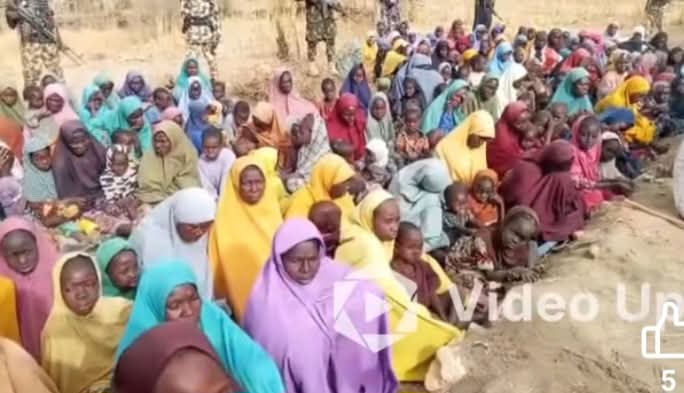
A newly disseminated video recording from the Jama’atu Ahlis-Sunna Lidda’Awati Wal-Jihad faction of Boko Haram has confirmed that 416 individuals abducted from the Ngoshe community in Gwoza Local Government Area remain in the custody of the insurgent group. The footage, which emerged on April 10, 2026, provides the first visual verification of the captives' condition while simultaneously drawing attention to their religious identity: the overwhelming majority of the hostages are Muslims seized while observing the rites of Ramadan.
The mass abduction occurred during the early days of March 2026, when militants launched an assault on Ngoshe, a settlement whose population is predominantly adherent to the Islamic faith. According to local accounts, the attack was perpetrated at dusk, coinciding with the Maghrib prayer and the breaking of the daily fast (Iftar). This timing rendered the community particularly vulnerable and tragically underscored the insurgents' disregard for the sanctity of Islamic observance.
Related news:
• Should Nigerian civilians defend themselves when 300,000 men are protecting over 240 millions people?
Confirmation of Religious Identity and Targeting
The victims' identity as Muslims is not a matter of speculation but of direct evidence. In the video released by the faction, a female captive speaking under apparent duress offers a statement that begins with an expression of gratitude to "Allah." Furthermore, community sources have confirmed that the attack resulted in the death of the Chief Imam of Ngoshe, the community's principal religious leader. The killing of an Imam during the abduction of his congregation constitutes a stark repudiation of the faction's stated theological objectives and aligns with a broader, well-documented pattern of violence wherein Boko Haram factions routinely target Muslim populations who refuse to submit to their specific, militant doctrine.

In the seven-minute recording, the insurgent spokesman asserts that the 416 captives—comprised largely of women and children—are in good health and have not been subjected to torture or sexual abuse. While such claims remain unverified and are widely regarded by security analysts as strategic messaging intended for negotiation leverage, the footage corroborates the scale of the humanitarian crisis.
Mediation Efforts and Official Response
The precise count of 416 hostages has been substantiated by the Borno South Youths Alliance, a group that has assumed a mediatory role in communications with the insurgent cell. The Alliance continues to advocate for the unconditional release of the captives and a peaceful resolution to the crisis.
At the governmental level, Borno State Governor Babagana Umara Zulum has reaffirmed the administration's commitment to securing the safe return of the abducted residents. While the Nigerian Army maintains operational control of Ngoshe and the wider Gwoza corridor, the release of this footage serves as a grim reminder of the persistent security challenges posed by insurgent factions operating in the Lake Chad Basin.
For the families of the 416 Muslim hostages in Ngoshe, the video offers the painful solace of visual confirmation of survival, yet it intensifies the urgent appeal for their liberation from a group whose actions stand in direct contravention of the faith they profess to defend.