



By Festus Damilare Ukolo | Fact Frontier.
Click here to read more about the reporter.
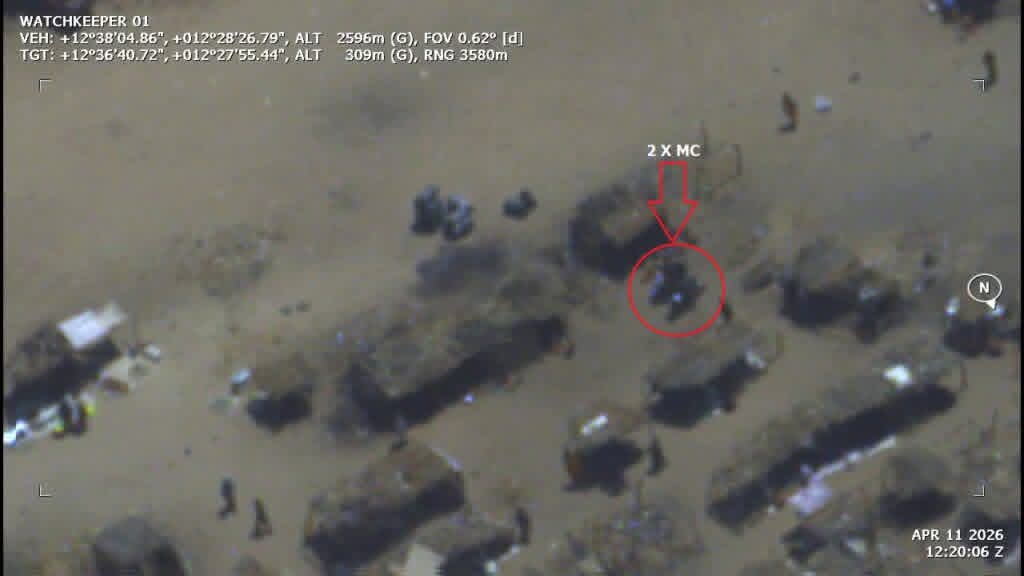
The crater left by a Nigerian Air Force bomb in the sands of Yobe State is more than a grave marker for the innocent; it is a mirror reflecting the grim arithmetic of a sixteen-year war that has lost its moral compass. While military briefings focus on "precision strikes" against "logistics hubs," the gut-wrenching images emerging from Jilli market—where over 59 souls, mostly women and children, were vaporized on a Saturday evening—demand a more uncomfortable question: In the ledger of insurgency, who actually benefited from the carnage of April 11, 2026?
On the surface, the operational reports suggest a clear, if bloody, tactical victory for the Nigerian Armed Forces. Intelligence confirmed that the market had become a twilight sanctuary for Boko Haram and Islamic State West Africa Province (ISWAP) elements. It was a place where taxes were extorted, supplies procured, and the next massacre plotted. By striking the location, the Air Force likely killed "scores of terrorists" and, in the short term, disrupted a potential wave of attacks on other communities. If this were a video game simulation, the "Terrorist" icon would be flashing red, indicating damage. But counter-insurgency is not a simulation. It is a war fought on the terrain of human hearts.
This is why the Jilli strike is not a victory; it is a self-inflicted, strategic hemorrhage from which only the terrorists will draw strength. The immediate beneficiaries of this tragedy are not the villagers of Yobe who live in constant fear, but the propagandists hiding in the Sambisa Forest and the marshlands of Lake Chad. The Nigerian military handed ISWAP a recruitment poster more potent than any sermon or dollar bribe. They have handed them the narrative: Look, the government does not see you as citizens to be protected, but as collateral to be erased.

The true loss here transcends the horrific body count. The primary loss is the erosion of the state's social contract. In these remote border communities, survival often depends on a fragile, pragmatic alliance with security forces. That trust has been annihilated along with the market stalls. When a farmer sees the silhouette of a fighter jet now, he will not feel the relief of an approaching guardian; he will feel the terror of an indiscriminate reaper. This psychological wedge is the oxygen that insurgencies breathe. It allows Boko Haram to rebrand itself from an oppressor into the only alternative for a community that feels abandoned or actively hunted by its own government.
Furthermore, the incident exposes the limits of kinetic warfare. You cannot bomb an ideology into submission, especially when the bomb falls on the heads of the very people who are the prize in this war. The terrorists lost a few foot soldiers and some vehicles—assets that are easily replaceable in the criminal economy of the Sahel. Nigeria, on the other hand, lost legitimacy. It lost the moral high ground. It lost the opportunity to present itself as a competent, caring authority on the global stage, inviting instead fresh scrutiny from Amnesty International and diplomatic partners who will now question the efficacy of military aid.
Therefore, in this brutal exchange, the ledger is clear. The Nigerian people have lost the most. They have lost their loved ones, their sense of security, and their faith in a system meant to shield them. But the terrorists are the ones who gained the most. They gained a martyrdom narrative they could not have purchased, a strategic wedge between the state and the rural poor, and a grim validation of their central premise: that the government is the real enemy.
This is the tragedy of Jilli. The bomb hit the market, but the shrapnel has fatally wounded the state's reputation in the northeast. Until the Nigerian military recognizes that civilians are the center of gravity—not obstacles—in this conflict, we will continue to win fleeting battles while losing the unwinnable war.


